
By
Super User
Best Travel Guide To Larim Tribe/People Cultural Trip In South Sudan
Best Travel Guide To Larim Tribe/People Cultural Trip In South Sudan
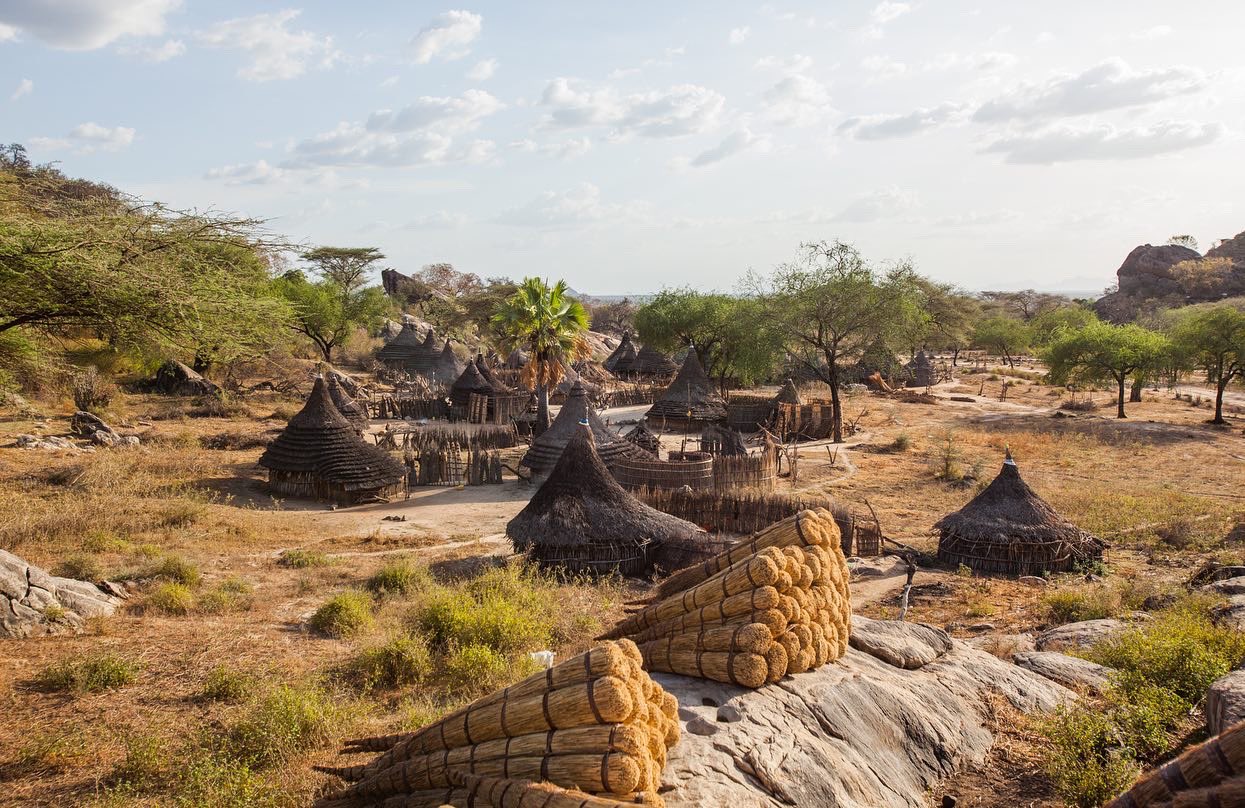
Meet the fascinating Larim tribe (also called Boya as they live near the Boya Hills) of South Sudan. The Larim live in permanent villages, though like the Mundari, they also have cattle camps where men take the cows to graze during the dry season. The villages are quite charming, made of thatched houses, often surrounded by thick fences. The dwellings have a rather low front opening, and one has to crawl to get in; roofs are often decorated with shells. A thick thorn fence encircles the village area, probably for defense against attack by their nemesis, the Toposa.
Equally characteristic and significant are the beaded ornaments and identity scarifications of the Larim herdsmen, a tribe that long ago perched in the hills of Boya to escape wars and cattle theft, building houses of clay and thatch, richly decorated with as many symbolic motifs. Their economy and social life revolve around the rural market called Camp 15, where they spend their days smoking tobacco in artisanal pipes and trading goods and livestock, especially with the neighboring Didinga clans.
About the Larim People of South Sudan:
The Larim are a Surmic ethnic group numbering 20,000 to 25,000 people living in Budi County, part of the Greater Kapoeta region of the South Sudanese state of the erstwhile Eastern Equatoria.
The language of the Larim is the Surmic Narim language, related to that of the Didinga, Tenet, and Murle in South Sudan. The people mostly live in the south and west Boya Hills, in the Mt. Kosodek and Mt. Lobuli areas. The main town is Kimatong, at the foot of the hills. They are agro-pastoralists, cultivating sorghum, maize, and beans, but mainly involved in livestock herding, hunting game, and fishing.
Larim People Close Tribes and Background:
The Larim are close relatives to the Didinga, the Murle, and the Tenet. They believe they came from Ethiopia as part of the group whose separation into apparently different ethnic communities was provoked by the dispute over the gazelle soup. The Larim have lived in their present location since the eighteenth century.
Experience with Larim People:
Visiting the Larim tribal villages is an interesting experience as it is primarily women and children staying in the villages, the men being away at the cattle camps. The only men who stay behind in the village are the elders and a few young ones who hopefully can protect the women.
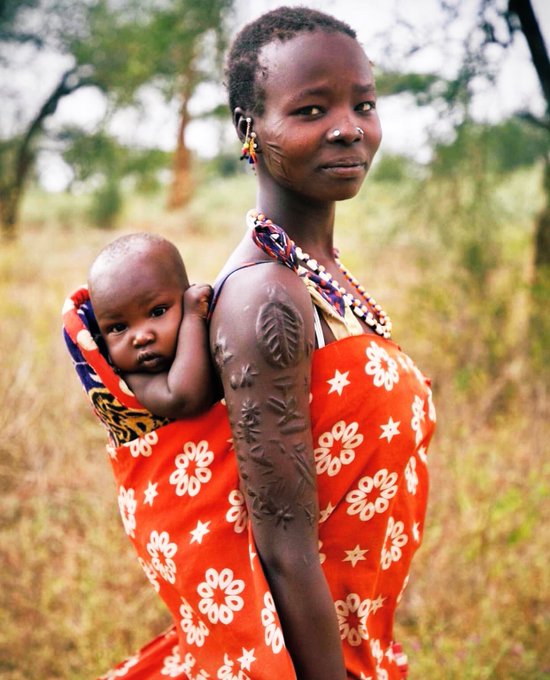
Men are always out with the cattle; women are in charge of everything else. They grow seasonal crops, such as sorghum, millet, and beans, raise chickens and goats, and fetch water. Over and over, women (and children who are –barely–old enough) clean, separate, and winnow the grains, then grind them using stones on a rock. Women also gather bamboo from the forest to build or repair their houses. They carry the long stacks of bamboo back home on their head.
Culture of the Larim People:
Larim women mostly wear traditional clothing, typically a beautiful skin skirt decorated with beads, or they sometimes cover themselves with a large piece of cloth that they tie over their bodies. Interestingly, young women and girls often wear short skirts made of colorful pieces of fabric sewn together. Larim women practice scarification somewhat differently from other tribes.
The design almost looks like Asian characters, and they do it all over their body. They adorn themselves beautifully, particularly the “ready to be married” young women who wear a chain that goes from the piercing in their nose to one in their ears decorated with beads. They also wear beaded belts, bracelets, and headbands. Widows also have their sartorial traditions. They dress in a beige color and wrap palm fronds around their foreheads, arms, and legs.
Book with Ultimate Wild Safaris; for a safari tour of the Larim tribe in South Sudan.
Email: This email address is being protected from spambots. You need JavaScript enabled to view it.
Mobile: +256 705 087 906 / 760 282 342