By
Super User
Best Travel Guide To Shilluk Culture/Tribe In South Sudan
Best Travel Guide To Shilluk Culture/Tribe In South Sudan
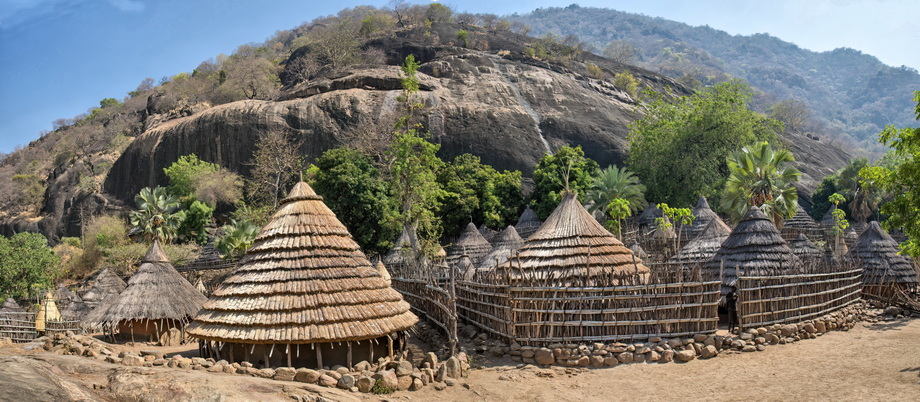
The Shilluk are a Nilotic group that lives along the Nile and Sobat Rivers. They are the third largest ethnic group in South Sudan. The Shilluk kingdom is hierarchical and falls under the authority of the hereditary Shilluk king or reth.
About South Sudan:
South Sudan is the least visited country in Africa and the World due to many years of conflict but the current peace deal (2018) gives adventurous tourists a great chance to explore and experience the country uniquely. The country has some untouched wilderness, with unique and remote cultures and tribes that have not been impacted much by modernity. And with less accessibility of these tribes by road, it gives a chance of being the first tourist to step foot in their villages. With South Sudan adventure tours, you have a great chance to understand these ethnic groups that have roamed and inhabited the wilderness of South Sudan for thousands of years. Our South Sudan holidays and tours take you about as far off the beaten track as it is possible to go, visiting tribal groups whose cultures have remained largely unchanged for centuries. For those of you who have seen everything, the chances are that you’ve not been to South Sudan. The world’s newest nation has only officially existed since 2011 and tourism here is a word that is met with blank stares.
History of the Shilluk Tribe:
The Shilluk people formed today's Shilluk Kingdom in southern Sudan in 1454. Historically, the Shilluk was a patriarchal monarchy led by a reth from the divine lineage of the cultural hero Nyikang who is believed to affect the nation's health.
The Shilluks were in charge of founding the Shilluk Kingdom, which ruled from 1490 to 1865. Formerly regarded as heavenly, the Shilluk King now reigns as a traditional chieftain in both Sudan and the Upper Nile region of South Sudan. The vast majority of Shilluk are Christians. The Shilluk also rule over the White Nile, and Kodok is where most festivities are held as well as the Shilluk King’s city of meditation. Three percent of the population is Shilluk.
Shilluk Language:
The Shilluk speak an Eastern Sudanic language of the Nilo-Saharan language family. The Shilluk are sedentary agriculturists with strong pastoral interests (cattle, sheep, and goats).
Religious beliefs of the Shilluk Tribe:
Most Shilluk have converted to Christianity, while some still follow the traditional religion or a mixture of the two; a few have converted to Islam. The Shilluk pride themselves on being one of the first Nilotic groups to accept Christianity, the other being the Anuak people. The Episcopal Church of Sudan dates the event to the late 19th century when the Church Mission Society first began to send missionaries.
Travel Tips on South Sudan.
Traveling in and out of South Sudan:
Entry to South Sudan is both by air and land, the country is bordered by 6 countries (Kenya, Uganda, Democratic Republic of Congo, Central African Republic, Sudan, and Ethiopia), and the only countries you can enter and exit by land (road) are Uganda and Kenya.
Permits and Entry Fees:
Photographic permit:
You require a photographic permit from the South Sudan Media Authority before you enter the country; you obtain one for yourself and your camera devices. This permit normality has a list of places and things that are not to be photographed. It is advisable to obtain one before traveling to the country if you are coming for a photographic tour otherwise you risk getting your camera and device getting confiscated. As of 2022, drones are prohibited in the country.
National Security permit:
The national security permit is a must for any traveler entering the country; this is because of their Interpol commitments, Counter-terrorism, and espionage. You can obtain this permit through your tour agency or sponsor. Always ask for a permit from your tour guide when traveling out of Juba or you may risk jail time, detention, or deportation, which may derail your travel plans.
Ministry of Wildlife Conservation and Tourism Fees:
This permit is obtained from the ministry and is required for those visiting national parks, tribes, and other protected areas.
Entry fees:
Entry fees are required for those who wish to visit community centers, national parks, or events. It is a requirement to enter the country.
All the above permits can be obtained through any of the South Sudan Tour Operators or Tour Guides.
Accommodation:
In the capital city of Juba, you can choose hotel accommodation from many categories. There are 5 and 4-star luxury hotels, reasonably priced hotels, budgeted hotels, and camping sites. When driving out of Juba City, accommodations are normally in camps or tents (with mattresses, bed sheets, and light blankets provided by our tour guide) or in local houses especially in tribal villages.
Transport:
We normally use 4×4 Toyota land cruisers to travel outside Juba City; they are well-serviced and air-conditioned with a first aid kit, extra tires, and toolbox. Self-drives are possible but you will need our tour guide with you all the time.
Food:
When in Juba City, you can dine in many hotels and restaurants (Local foods or continental) around the city and the riverside. When travelling out of Juba we normally have a cook accompanying us throughout the tour. The most important thing is you let us know of your menus and food restrictions before the tour.
Arrange with Ultimate Wild Safaris for a Cultural tour in South Sudan.
Email: This email address is being protected from spambots. You need JavaScript enabled to view it.
Mobile: +256 705 087 906 / 760 282 342